
On your phone first
Records live in the app's private storage on your phone, so they open offline and instantly.

Nabz · नब्ज़ · pulse
Snap a prescription, a lab report or a scan. Nabz reads it, files it under the right person, reminds the doses and answers questions about your history, with the source cited.
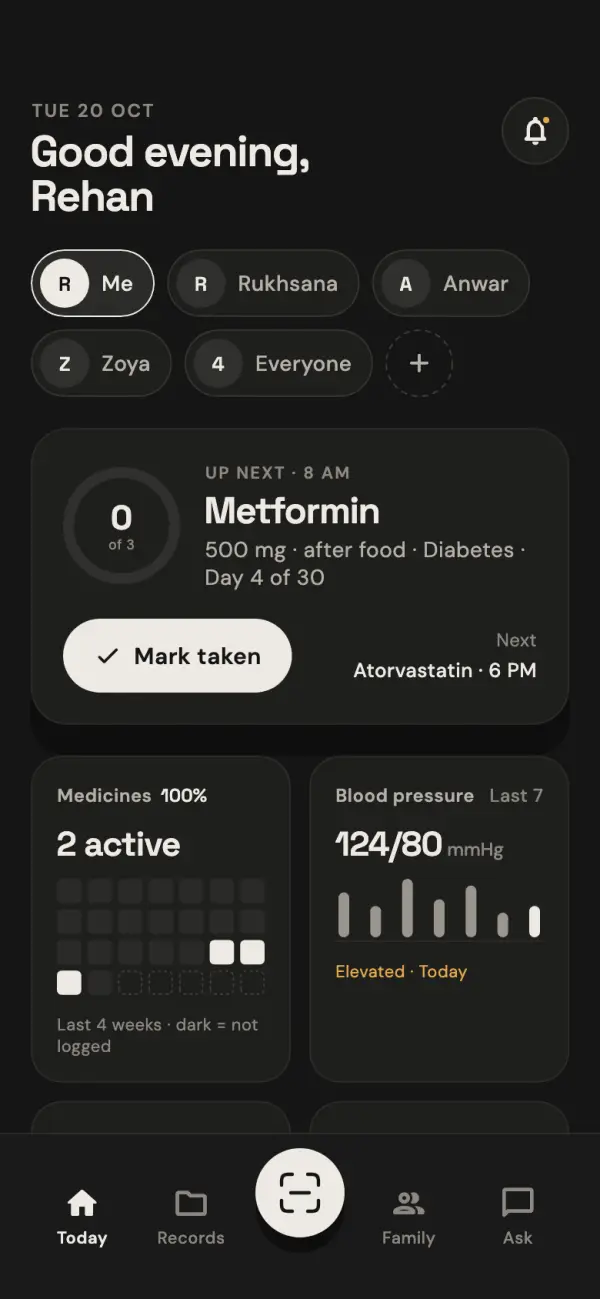
How it works
Photograph any paper, or import a PDF. Prescriptions, lab reports, scans, bills and discharge notes.
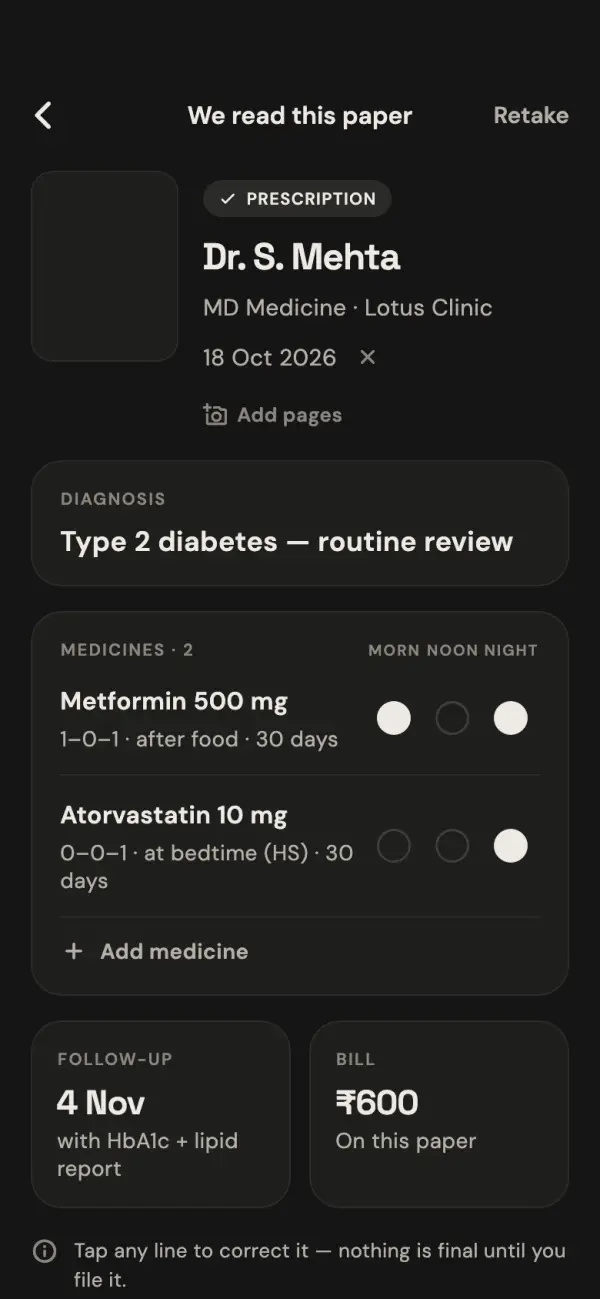
The AI reads it, handwritten scripts included: doctor, medicines, dosage timings, test values, follow-up date.
You check the reading, pick who it belongs to, and it lands on their timeline. Dose reminders are set up for you.
"Is a repeat cholesterol test due?" Answers come from your own records, each one citing its paper.
For the whole family
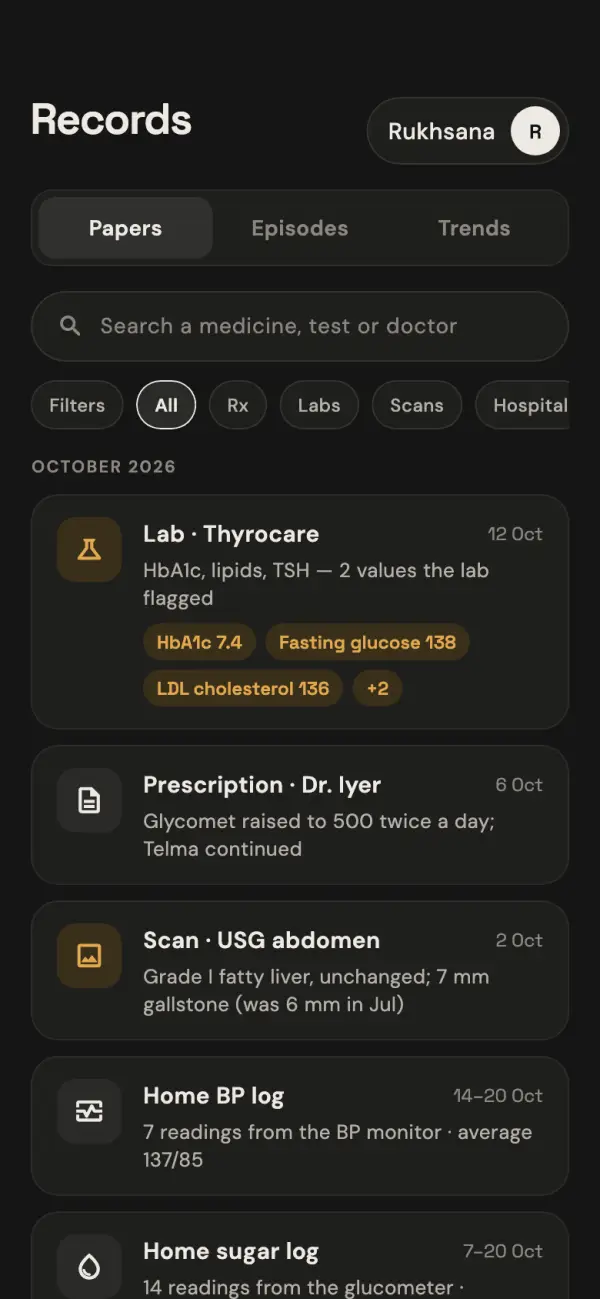
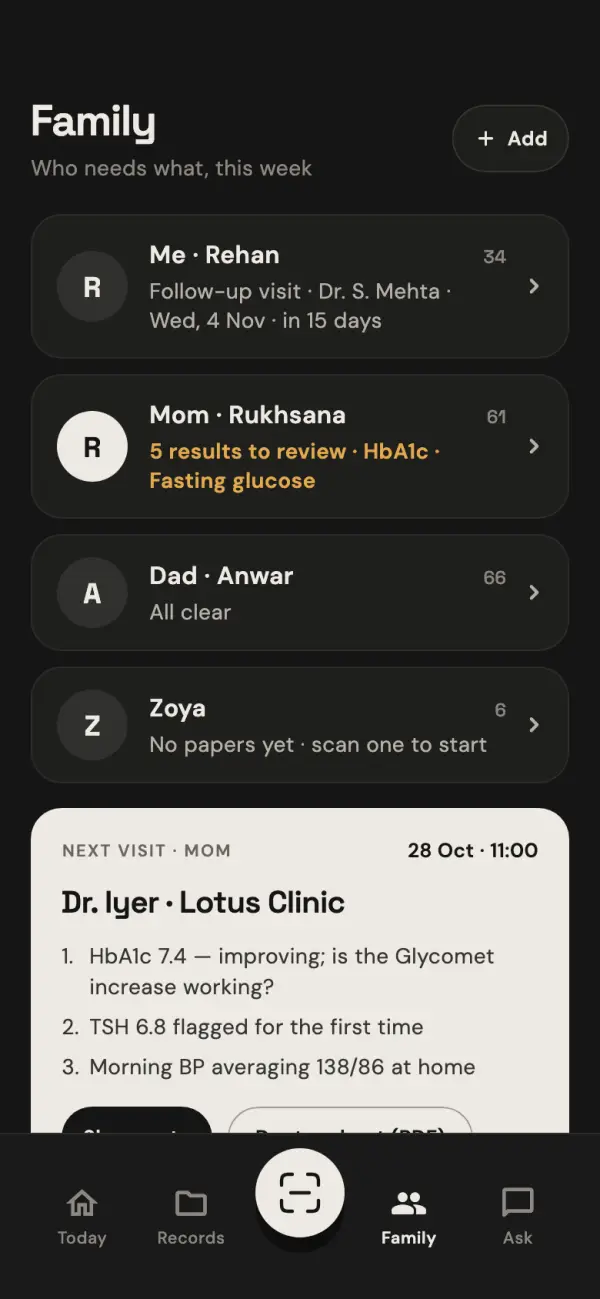
Your parents' reports, your child's vaccinations, your own prescriptions. Each person gets a timeline, and the Family tab shows who needs what this week.
Ask your history
Ask in English or Hindi. Values like "my last HbA1c" are read straight from your records. Every answer says which paper it came from, and medical decisions stay with your doctor.
Is Mom's HbA1c getting better?
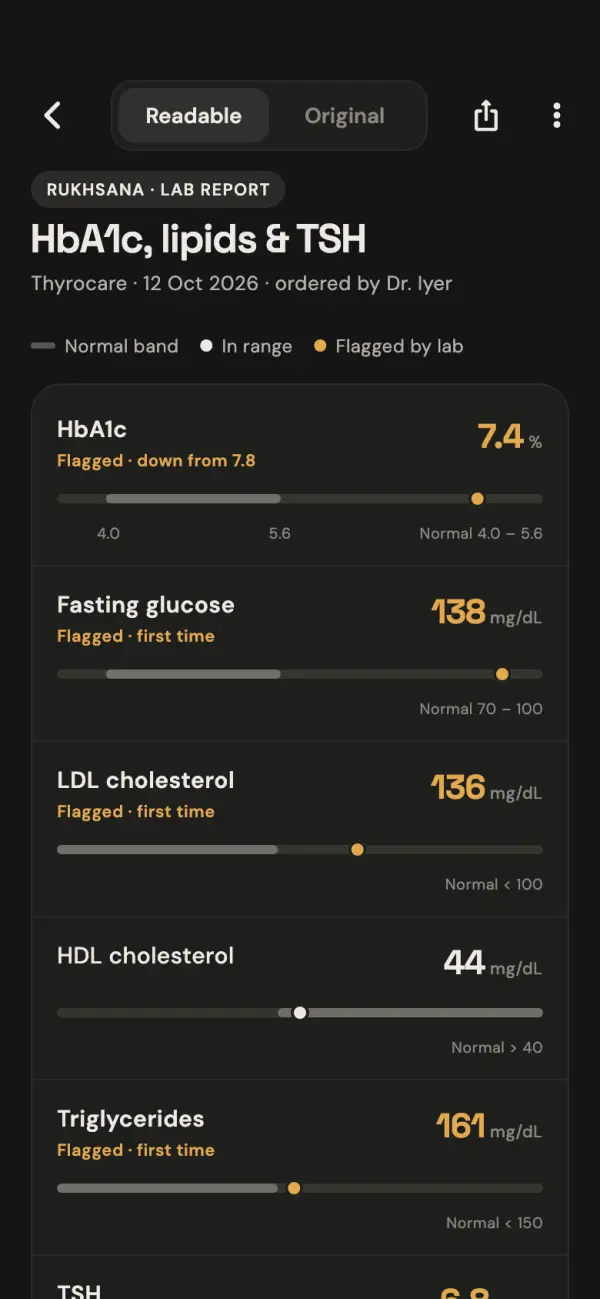
It has come down at every test this year: 8.4 in January, 8.1 in April, 7.8 in July and 7.4 on 12 October. That is still above the lab's normal band of 4.0 to 5.6. Worth discussing with Dr. Iyer on 28 Oct.
Source Lab · Thyrocare · 12 Oct 2026
Explains your records. Not a diagnosis. Your doctor decides.
Privacy
Records live in the app's private storage on your phone, so they open offline and instantly.
Signed-in accounts get a private cloud backup for reinstalls and new phones. You can turn automatic backup off.
Settings → Delete account erases your cloud backup and sign-in. You can also request deletion on the web.
To read a paper or answer a question, its content is sent to Google's Gemini AI models. Nabz organises and explains; it is not a medical device and never diagnoses or prescribes. The full details are in the privacy policy.